Blue Bins Explained: What They Are For and How to Use Them Well
Blue bins are part of everyday life in Adelaide, yet plenty of households are unsure exactly what belongs in them. Here is how the kerbside system works, how to recycle smarter, and what to do when the bin is simply not big enough.
Most Adelaide households run a three-bin kerbside system: one bin for general waste headed to landfill, a yellow-lidded bin for recycling, and a green-lidded bin for garden organics. In many South Australian council areas the general waste bin carries a blue lid, which is why locals talk about their blue bins when they mean the everyday rubbish bin. Lid colours do vary between councils, with some using red for general waste instead, so the first tip in this guide is simply to check your own council’s bin guide if you are ever unsure.
Whatever the lid colour at your place, the principle is the same: the general waste bin is the last resort, not the first option. Everything that lands in it goes to landfill, where it takes up space, generates greenhouse gases and costs councils (and therefore ratepayers) money to manage. The less it carries, the better for your suburb, your rates and the planet. The good news is that a household paying attention to its sorting can usually halve what goes to landfill without buying anything or changing its lifestyle, purely by sending each item to the right destination.
What Are Blue Bins Actually For?
The blue general waste bin exists for household waste that cannot be recycled or composted through the other two bins. Think of it as the destination for true leftovers once the recyclables and organics have been separated out.
Belongs in the General Waste Bin
Soft plastic wrappers and bags (unless your council runs a soft plastics program), nappies and hygiene products, broken crockery and glassware, polystyrene, worn-out textiles that cannot be donated, and small broken household items with no recyclable path.
Should Never Go in It
Batteries and electronics (fire risk in trucks, and they have drop-off programs), chemicals, paint, gas bottles, syringes, hot ashes, building rubble, and anything recyclable that simply was not sorted. Clean paper, cardboard, glass bottles and rigid plastics all belong in the yellow bin instead.
Recycling Tips That Keep Blue Bins Half Empty
Keep recyclables loose and clean
Never bag recyclables. Bagged items cannot be sorted at the recycling facility and often end up in landfill anyway. Give containers a quick rinse, leave them loose in the yellow bin, and lids off for glass jars. When in doubt about a specific item, most Adelaide councils publish an A to Z waste guide online, and a ten-second check beats a wrong guess that contaminates the truckload.
Use the green organics bin properly
Garden clippings, prunings and (in most SA councils) food scraps with a kitchen caddy all belong in the green bin. Organics in landfill create methane, so this one habit does more environmental good than almost any other.
Use return points for the tricky items
South Australia’s container deposit scheme pays 10 cents per eligible bottle and can. Batteries, globes and e-waste have free drop-off points at many supermarkets, libraries and council depots. Ten minutes of sorting turns landfill into value.
Do the lid test before you toss
Before anything lands in general waste, ask one question: could the yellow bin, the green bin, a return point or a charity shop take this instead? If the honest answer is no, the blue bin has earned its cargo.
When Blue Bins Are Not Enough
Kerbside bins are sized for weekly household rhythm, not for life’s bigger clean-ups. A decluttering weekend, a house move, a deceased estate or a garage that has quietly filled over a decade will overwhelm even the most disciplined bin roster, and stockpiling bags beside the bin for months is no way to live. Overloading the kerbside bin is not the answer either: lids that will not close are often left unemptied, and squeezing renovation debris or heavy rubble into a household bin can damage both the bin and the collection truck.
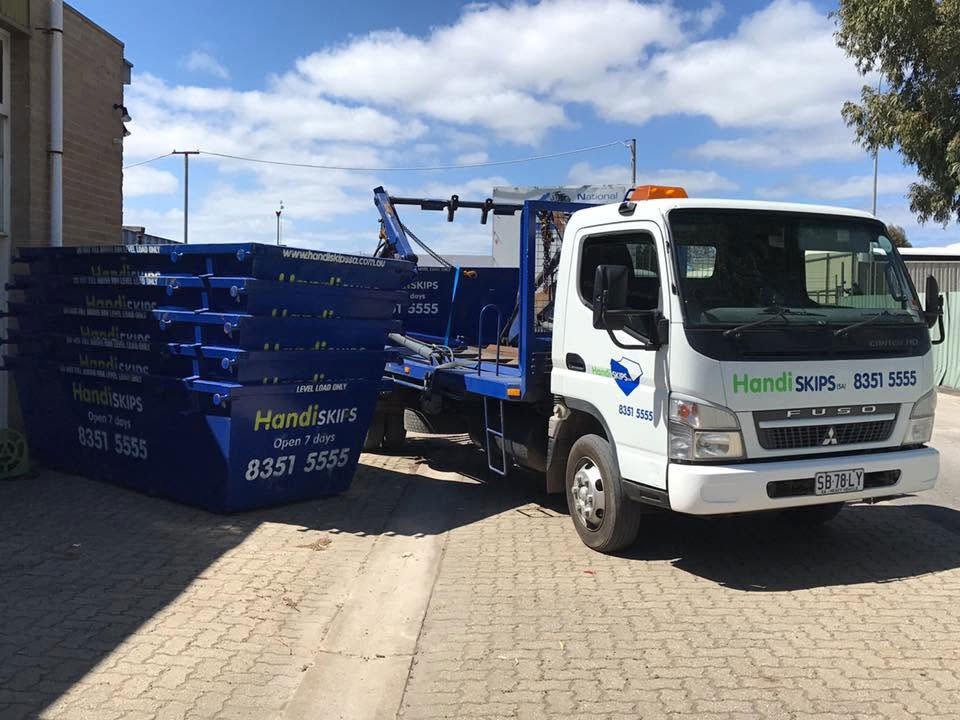
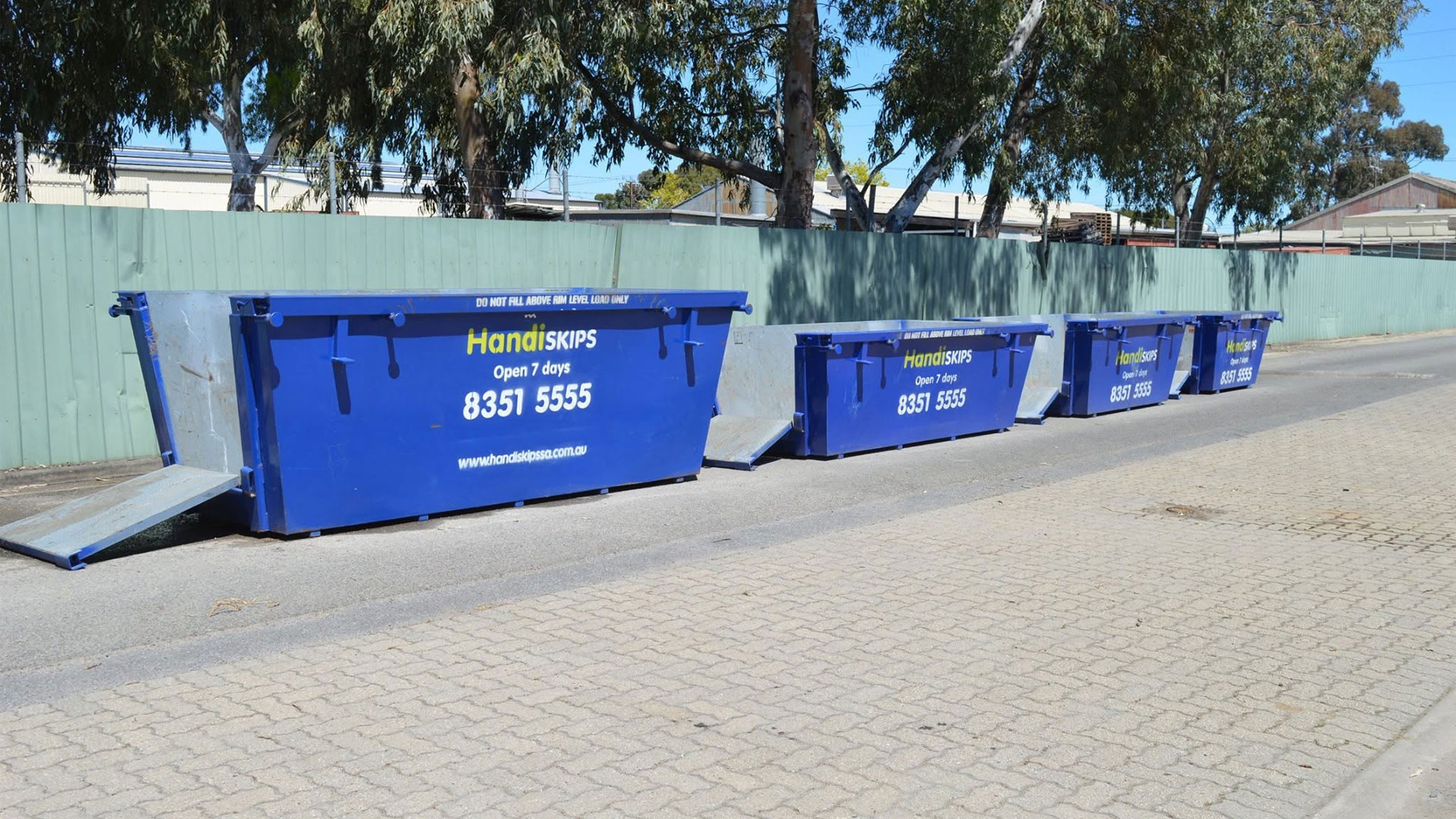
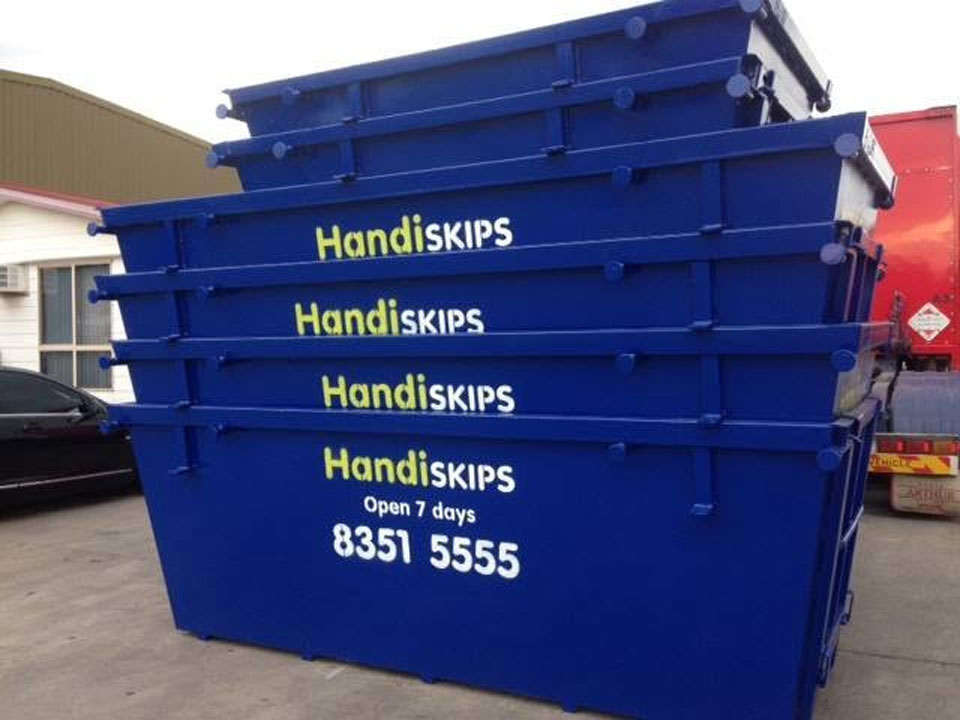
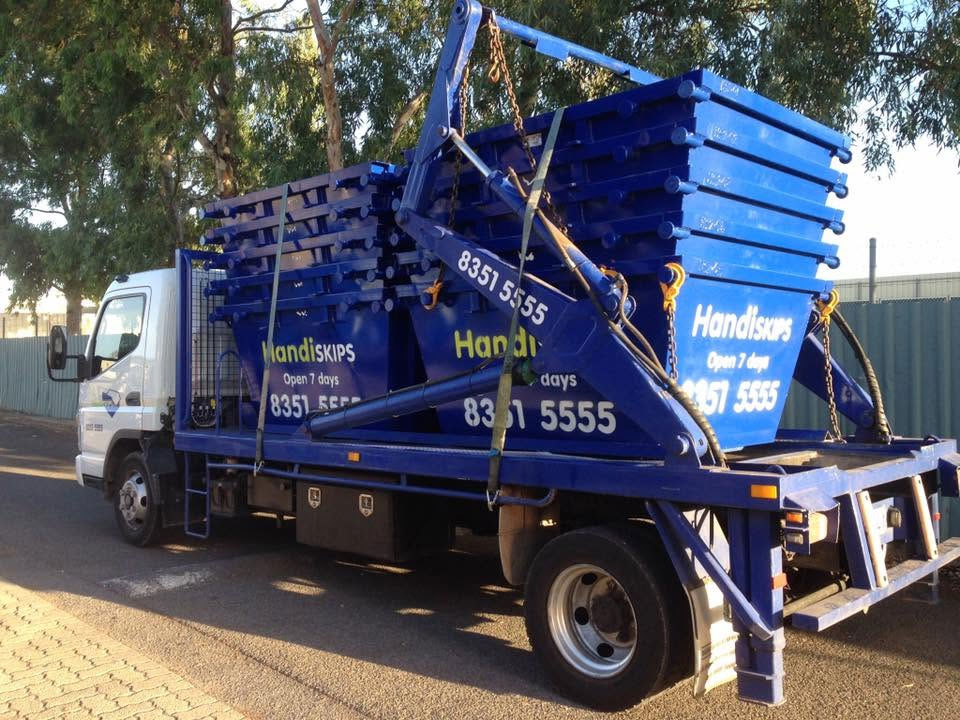
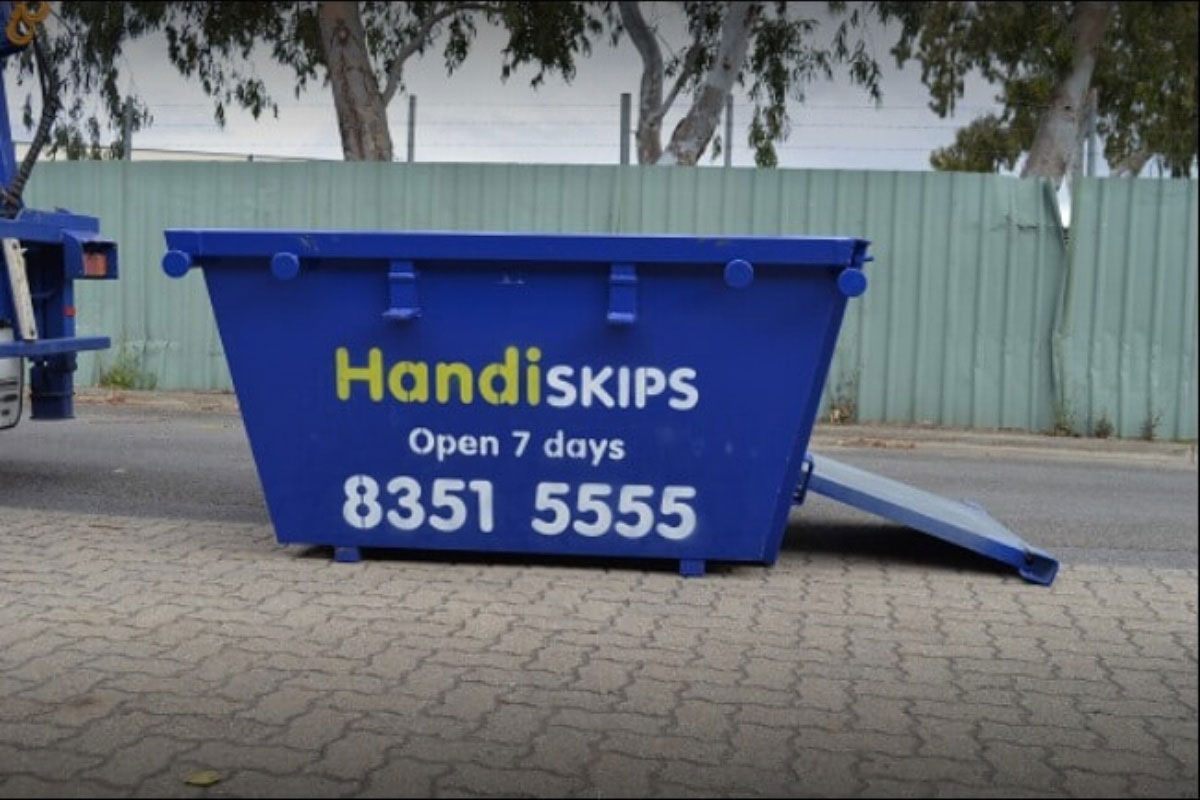
That is the moment for a skip. A single 2m³ mini holds roughly six to eight wheelie bins worth of waste, delivered to your driveway with a walk-in door and collected when you are done, with up to 95% of the contents recycled through commercial sorting. For the full picture of how skip hire fills the gap kerbside collection leaves, see our rubbish removal Adelaide page.
Common Kerbside Bin Questions
Why is my general waste bin blue but my neighbour’s suburb uses red?
Lid colours are set by each council, and Adelaide’s councils have not all standardised. Blue and red lids both commonly mark general waste in SA. The lid colour matters less than the bin’s purpose, so check your council’s bin guide once and you are set.
Can I put renovation waste in my kerbside bin?
No. Building materials, rubble, plasterboard and timber offcuts do not belong in any kerbside bin and can damage collection trucks. Renovation waste needs a dedicated skip, booked at the renovation waste rate so it can be sorted and recycled properly.
My bin is overflowing every single week. What are my options?
First, audit what is going in for a fortnight: most overflowing general bins are quietly carrying recyclables and organics that belong in the other two bins, and rehoming those often solves the problem outright. If the volume is genuinely one-off, from a clean-out or a project, a skip clears the backlog in a weekend. Many councils also offer a larger bin or hard rubbish collections for a fee.
Clear the Backlog With a Skip Bin
Six bin sizes from $180 with fixed pricing, walk-in door access, and up to 95% of waste recycled. Delivered across 200+ Adelaide suburbs.
Call Lisa on (08) 8351 5555 or learn more below.